Why AI Won't Replace Your Executive Virtual Assistant (And How Smart EVAs Are Using It Instead)
Montiqua Charmaine

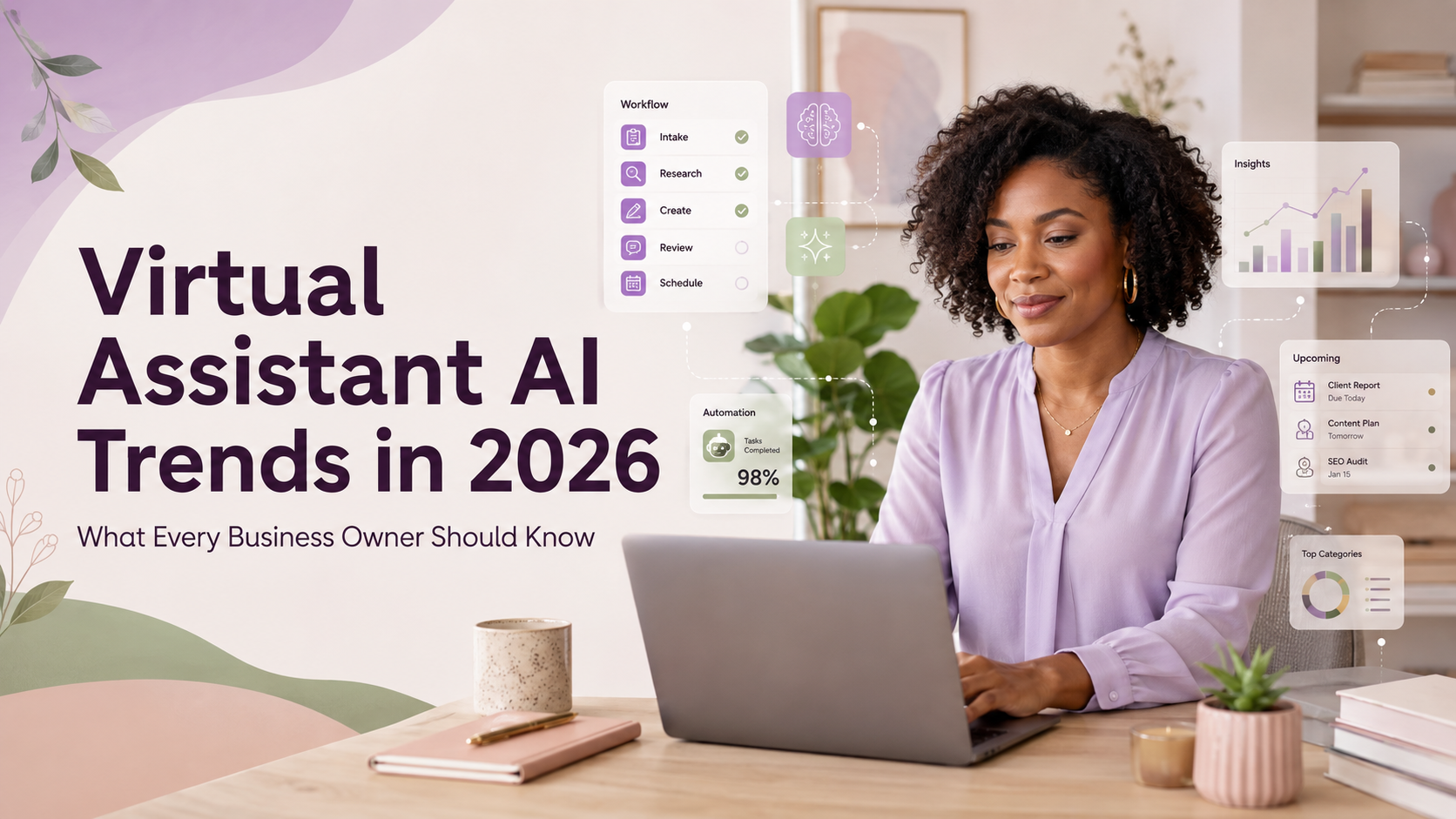
AI is everywhere. Every week there's a new tool that can write, design, automate, analyze, and do things that used to take people hours in a matter of seconds. If you've been watching this unfold thinking, "So where does that leave me?" — you're not alone.
Quick answer: AI is changing virtual assistance, but human judgment, trust, communication, and operational ownership still make an executive VA essential.
But here's what I need you to hear: AI is not replacing people. It's replacing outdated ways of working. The people who learn how to use AI early are getting ahead — landing better opportunities, working more efficiently, and positioning themselves as the kind of professionals businesses actually want to keep around.
AI Isn't the Threat — Being Unadaptable Is
Every major technological shift in history created fear — the internet, smartphones, social media. And yet, the people who leaned in early built careers, companies, and entire industries around them. AI is no different. The productive mindset isn't "AI is going to take my job" — it's "How can AI make me better at what I already do?"
Why Learning AI Early Gives You a Serious Advantage
You Become More Efficient — AI handles the repetitive work that quietly eats your time — drafting emails, generating content ideas, organizing data, scheduling posts.
You Increase Your Income Potential — Businesses are actively looking for people who understand AI tools. Even basic knowledge can help you land better clients and increase your service rates.
You Future-Proof Your Career — Instead of being the person who gets replaced by automation, you become the person who manages and uses it.
Practical Ways to Start Using AI in Your Daily Life
For Work: draft emails, client responses, or proposals (then edit and personalize); generate social media ideas and content outlines; organize your to-do list; create outlines for blog posts or service packages; build SOPs faster.
For Personal Life: meal planning and grocery lists; budget tracking; daily scheduling and time blocking; learning new skills faster through AI-assisted research.
How to Use AI Safely (This Part Matters)
Protect Your Personal Information — never enter sensitive data into AI tools: no Social Security numbers, bank details, private client information, or passwords.
Fact-Check Everything — AI can and will make mistakes, and can sound confident while being completely wrong. Always verify financial, legal, health, or statistical content before publishing or acting on it.
Avoid Over-Reliance — AI should support your thinking, not replace it. Your ideas, voice, and judgment still matter.
Using AI Effectively (Without Losing Your Voice)
Start with your idea first, then let AI help you develop it. Edit and personalize everything AI generates — add your voice, your examples, your personality. Think of AI as your assistant, not your replacement.
Making Your AI Use More Eco-Friendly
AI tools require energy to run. Be intentional with your usage, keep requests clear and focused to avoid unnecessary retries, and use AI to reduce waste elsewhere in your business.
The Bottom Line
AI is not here to take your job — it's here to change how jobs are done. The real risk is waiting too long to learn it. When you stay curious, learn the basics, and use it intentionally, you don't fall behind. You move ahead.
Ready to Build a VA Career That's AI-Proof and Future-Ready?
NextLevel VA is a 22-week Skool training program designed to take you from beginner to in-demand VA — with specialization tracks, real-world assignments, and a built-in hiring pipeline.
Join NextLevel VA on Skool and start building your future-proof career →
Some of the tools mentioned in this article may include affiliate links. If you sign up through these links, we may earn a small commission at no extra cost to you.